News
Recommend this page to friend Recommend this page     Print Print
 

Conduct sound through bones of skull


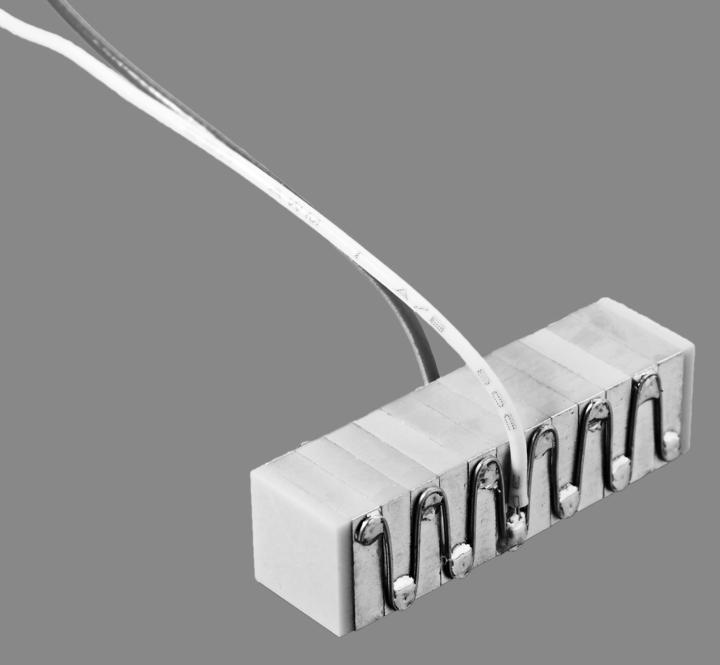
With Noliac Systems' bone microphone, you are able to conduct sound to and from the inner ear through the bones of the skull. The piezoelectric sensor is designed for measurement of acoustically invoked vibrations in communication frequency band of audible spectrum.


 LD173C Bone microphone


Noliac Systemspiezoelectric vibration microphone type LD is designed for single-axis vibration measurement. Measured value is acceleration in base axis direction, and the shape is custom tailored for using as a sensor in osteo-communication system.


Osteo communication systems

Osteo uses the principle of osseous sound transmission, whereby background noises are effectively filtered out.


Bone conduction is the reason why a person's voice sounds different to him/her when it is recorded and played back. Bone conduction tends to amplify the lower frequencies, and so most people hear their own voice as being of a lower pitch than it actually is.


Some hearing aids employ bone conduction, achieving an effect equivalent to hearing directly by means of the ears. A headset is ergonomically positioned on the temple and cheek and the electromechanical transducer, which converts electric signals into mechanical vibrations, sends sound to the internal ear through the cranial bones. Likewise, a microphone can be used to record spoken sounds via bone conduction.


Specifications of bone microphones


Bone microphones

Technology 


Noliac's piezoelectric vibration bone microphone type LD is designed for single-axis vibration measurement.


Measured value is acceleration in base axis direction. The sensor is designed for measurement of acoustically invoked vibrations in communication frequency band of audible spectrum. The shape is custom tailored for using as a sensor in osteo-communication system.


Frequency characteristic of LD173C sensor

Frequency characteristic of LD173C sensor


Sensor schematic

Sensor schematic


Recommended connection, testing circuit


Recommended connection, testing curcuit


DC output characteristic

DC output characteristic


More information

Please contact:

Sales

Tel.: +45 4912 5034


Custom products


Request for quote


Newsletter


Related links